

Quietly good will come
Tom Tapanila made an energy renovation of his frontman's house - one wall at a time. The end result is a more comfortable, draft-free house and a significantly reduced energy bill. Tom and his family live in a blue, charming wooden house in Tuusula, right near the center of Hyrylä. The front-type house was built in the mid-1950s.
Tom began renovating the house little by little in the early 2000s. Originally, a 25 m2 extension was built in the 80-square-foot house and the interior was put into new faith. The last thing was the facades and the improvement of the thermal insulation. The facade renovation was also carried out gradually, wall by wall. The reason for this was not so much the inconvenience of the work, but the lack of time.
Tom wanted to do the renovation himself, but the work rushes split the contract into small parts. Tom planned the project carefully. In addition to improving living comfort and energy efficiency, the goal was to keep the look of the house in the right spirit.
Chews off, replacing more energy efficient insulation
The front of the front manor house had the original machine seam damper and the Mineriite boards installed on the outer walls in the 1970s. The mineralite cladding was installed on top of the original horizontal panel. When repairing the façade, the old structures were demolished all the way to the diagonal boarding of the inside of the wall.
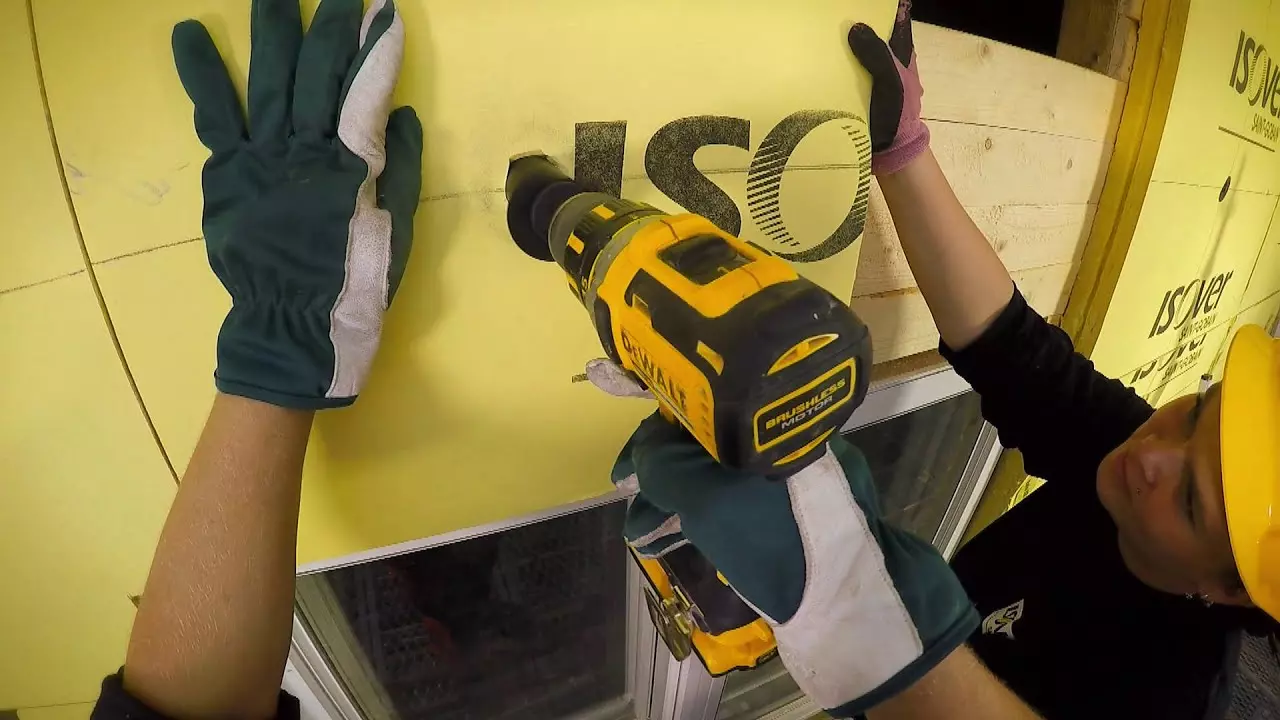
The original insulation, about 100 mm layer of dry sawdust, was drained into garbage bags and taken to a landfill. The removed sawdust was replaced with a 100 mm layer of mineral wool ISOVER KL-33 installed between the frame posts. Finally, a 50 mm combined windshield and thermal insulation ISOVER RKL-31 Facade was installed on top of the frame, and finally, of course, a new exterior cladding.
Additional insulation of the upper floor was carried out in connection with the roof renovation. The roof structure was slightly raised to provide sufficient space for additional insulation. The increase was considered moderate so as not to change the appearance of the house. 125-150 mm of chew insulation was found on the upper bottom. It was removed and replaced with mineral wool. Soft mineral wool 200 mm was installed on the oblique sections of the upper base and 300 mm on the middle part
Monier's glossy black Hollander clay roof tile was installed as the new gable roof. In addition, during the internal renovation, a 25 mm combined vapor barrier and ISOVER REK thermal insulation were installed on the inner surface of the upper floor.
The traction was lifted, the electric bill was reduced
The Tapanila family quickly noticed the effects of the energy renovation when the feeling of traction disappeared. In the old house, traction is a common nuisance. The structures are not dense enough, so the replacement air coming through them uncontrollably feels like a traction, no matter how the interior is heated. The wind resistance of the Tapanilo house structures was significantly improved with additional insulation and new wind protection.
The results of the energy renovation have also been reflected in the electric bill of the electrically heated house. Electricity consumption has fallen, despite the new auxiliary wing. - The savings are in the range of 2000 - 4000 kWh per year, Tom calculates.
Of course, the activities of the residents and the weather conditions always affect the energy consumption of the house. “If, after the energy renovation, even if the electric sauna is heated more often, the increase in the consumption of operating electricity will reduce the overall savings,” Tom explains.
It must also be remembered to adjust the heating of the building to match the improved thermal insulation. The actual monitoring of energy consumption after energy renovation should be scheduled for several years.
In general, in old houses, an additional insulation layer of 50-100 mm does not yet have too much effect on the appearance of the building, but on energy efficiency considerably. It is advisable to make additional insulation with an insulation thickness of at least 50 mm. The benefits are greater than with thinner insulation thicknesses, but the workload is the same whether you install 25 mm or 50 mm insulation. In addition, according to the renovation regulations that came into force in the beginning of autumn 2013, the energy efficiency of the building must be improved in a licensed renovation project, and additional wall insulation (halving the U-value) is one of the options presented.